Neumann Posts Largest Brokered Sale in Redding History

NEUMANN REAL ESTATE AND CHRISTIES INTERNATIONAL REAL ESTATE SELL
‘DEER RUN’ FOR $13.6 MILLION

Deer Run, located at 26 Giles Hill Road in Redding, CT, was sold for $13.6 million to a family from Manhattan, NY on March 17, 2016 by real estate agents Jane Tullo and Karla Murtaugh of boutique brokerage Neumann Real Estate in Ridgefield, CT. The property was listed for sale by Tullo and Murtaugh, in conjunction with David Ogilvy of David Ogilvy & Associates of Greenwich, CT, and offered a sprawling 16,000 square foot manor home and just over 300 acres of pristine contiguous land including a 7 acre lake, fishing pond, a boathouse, miles of riding and hiking trails, and lush fields. It is the largest contiguous parcel of privately-owned land in Fairfield County. Neumann Real Estate represents nine area towns as the exclusive Affiliate of Christie’s International Real Estate, the world’s leading luxury real estate network

“Our company was honored to represent such an extraordinary property and I was pleased to assist our team and be an integral part of its sale. After months of negotiation, Deer Run now has a new owner, “ says Russ Neumann, broker and partner at Neumann Real Estate. “This deal represents the best in a real estate transaction and the commitment and cooperation amongst brokerages, agents and attorneys to bring it to completion was commendable. Jane Tullo and Karla Murtaugh did such a wonderful job of marketing the property both locally and nationally, and with Christie’s as our partner internationally, we knew we would attract the right buyer.”

“This was the perfect opportunity for someone who values privacy over all else,” says Tullo, “The scenic, unspoiled land is a nature lover’s paradise.”

“It is extremely rare to find such a spectacular, expansive setting in such close proximity to New York City. Deer Run offers a wonderfully sophisticated lifestyle for the family who has an appreciation of natural beauty, but prefers to live under the radar,” continued Murtaugh.

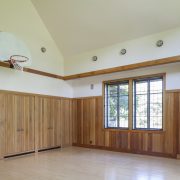
Located in the foothills of the Berkshire Mountains just over an hour from Manhattan, the grand estate features a striking stone and shingle Manor house. With seven bedrooms and spanning 16,000 square feet, the home blends a relaxed ambience with grand architecture. A veritable outdoor paradise, seven trails lace the grounds, imparting abundant opportunities for hunting, fishing, bird-watching, horseback riding, cross-country skiing, and hiking. On the northeastern side of the property, Mirror Lake is large enough to canoe or boat on, and its crystal-clear waters are perfect for swimming. A boathouse with a 15-foot deck, a ramp, and a dock rests beside the lake. Miles of riding trails begin at the barn, while an apple orchard and bountiful fields framed by fieldstone walls also adorn the grounds. Indoor and outdoor heated pools, a tennis court, a gymnasium with an indoor basketball, and a billiards room, afford additional recreational diversions. Sequestered above the four-car garage, a private one-bedroom guest apartment is ideal as a caretaker’s wing or a studio.

About Neumann Real Estate

Founded in 1969 by Harry & Lorraine Neumann, the company has two locations, in Ridgefield and New Fairfield, CT. Today, the business is owned and operated by the second generation – Chip, Russ, Jeff, Bob & Shaylene Neumann. Neumann Real Estate’s service area includes all of mid/northern Fairfield County, southern Litchfield County and Westchester County, NY. The company represents both buyers and sellers, and tenants and landlords in all aspects of the real estate transaction and also handles much of the corporate relocation business for many area companies. With more than 30 active agents, Neumann Real Estate has excelled to become the dominant real estate firm in the area.

About Christie’s International Real Estate

Christie’s International Real Estate is an invitation-only affiliate network composed of the world’s most proven and qualified real estate specialists in the luxury residential sector. The company has offices in London, New York, Hong Kong, Beverly Hills, Chicago, and Palm Beach, and approximately 135 global affiliates with 25,000 real estate professionals in 45 countries. For additional information about Christie’s International Real Estate, please visit www.christiesrealestate.com.


4 Home-Related Tax Deductions You Shouldn’t Overlook

Tax season is upon us, and if you’re a homeowner, you can claim some sizable deductions that may help reduce the amount you’ll owe.

Mortgage interest, property taxes and mortgage insurance premiums are just some of the deductions you can take if you have a mortgage on your home. Together, they can add up to thousands of dollars in savings on your tax bill.

Mortgage interest

Home mortgages are structured so that a huge chunk of each payment you make in the initial years of ownership goes toward paying down the interest on your loan and only a little goes toward the principal. The good news is that you can deduct the interest payments on your primary (and sometimes a secondary) residence — up to $1 million (or $500,000 if you’re married and filing separately).

Most homeowners count this as one of the largest deductions on their tax bill each year. It applies to home purchases and mortgage refinances, home equity lines of credit and home equity loans, sometimes called second mortgages. The deductible interest on home equity debt — regardless of how you used the money you pulled out — applies to loans of $100,000 or less throughout the year (or $50,000 if you are married and filing separately).
This deduction, filed with IRS Form 1098, can add up to thousands of dollars for most homeowners. The benefit: It reduces your taxable income so you don’t owe as much come tax time.

The key to taking advantage of the mortgage interest deduction is itemizing your deductions in meticulous detail, Poulos says. Your lender will send you a statement each year to let you know how much interest you paid; that will help you figure out if it’s worth your while to itemize.

Points

If you bought a home in 2015, there’s another deduction (score!) you get to include on your tax bill: mortgage points. Most borrowers pay for points, which come in two forms: discount points, which allow you to prepay some of your loan interest in exchange for a better mortgage rate; and the loan origination fee. One point is equal to 1% of your loan amount. Many homeowners completely overlook this deduction, Poulos says.
Let’s say you bought a home in New York using a $500,000 loan with a 1% origination fee. That’s $5,000 you can itemize as a deduction on your tax bill, and you want to get credit for each and every dollar you spent.

Your lender should provide you with a copy of your settlement statement, with the loan origination fee and discount points listed on it, in January. If you don’t receive a copy, ask for one and verify that this information is listed on it so you can take advantage of the deduction on Form 1098.

Property taxes

Another perk of homeownership is writing off your annual property taxes. You get to deduct these taxes in the year they’re paid, not the year they were due.

Your county’s property assessor’s office typically sends out a statement at the beginning of the year showing the amount of your property taxes. One more thing to keep in mind: If you bought a home and reimbursed the sellers for taxes they had already paid for the year, you’ll see that reflected on your settlement statement, not on your 1098.

Mortgage insurance

If your down payment was less than 20% of your home’s purchase price, you’re likely paying a mortgage insurance premium. Through the end of 2016, the mortgage insurance premium deduction includes policies provided by the Department of Veterans Affairs, the Federal Housing Administration and the Rural Housing Service, as well as private mortgage insurance from conventional lenders, issued after 2006.

The IRS treats your mortgage insurance premium payment as mortgage interest that you can deduct on Schedule A of Form 1040. Although the overall amount of your premium can be counted as an interest deduction, it phases out for high-income earners, Poulos says. For instance, you can’t deduct your mortgage insurance premium if you earn an adjusted gross income of more than $109,000 (or more than $54,500 for married couples filing separately).

Items you can’t deduct

Sure, you get some pretty sweet deductions as a member of the homeowners club, but there are some exceptions. Here are a few real-estate-related costs you can’t deduct:

Home and title insurance coverage (other than mortgage insurance premiums)
Depreciation
Utilities, such as gas, electricity and water
Most settlement costs (other than points)
Forfeited deposits, down payments or earnest money
Home improvements paid via a private loan, cash or credit card
Homeowners association fees
Transfer taxes (stamp taxes) in a personal home sale

Check out the IRS list of special situations and other nondeductible items related to homeownership.

Bottom line

One of the major benefits of owning your home has always been the tax write-offs that come with the package. Keep in mind, though, that if your itemized deductions don’t add up to as much as the standard deduction you’re eligible for, the standard deduction would be the better way to go.

If you have a complicated tax situation or you’re unsure about certain real-estate-related deductions, it’s a good idea to consult with a licensed tax professional for guidance. You don’t want to miss out on deductions that will lower your tax burden and keep more money in your pocket.

Homeownership can have some pain points along the way, but the tax benefits you reap help make the largest investment of your life pay off in the long run.

*This article has been edited. Original article appears on NerdWallet

How to Decide Whether You Should Remodel or Move

It’s not easy to decide whether you should remodel your home or it makes more sense to move. But if you’re asking the question, chances are you’ll be better off making some kind of change. Maybe your home no longer fits your family’s needs, or perhaps it’s showing signs of age. A home renovation might fix the problem, but so could putting your house up for sale and finding another one.
Either option will affect your wallet. But your decision also could affect much more, from neighbor relationships to school districts and work commutes. You’ll want to make the choice that’s right for you and your loved ones. Here are some tips to help you decide.

List Home Improvement Goals

Start by making a list of upgrades you’d be willing to pay for, either in your current home or a new one, says Michael Chadwick, a financial advisor in Unionville, Connecticut. For example, if your family’s growing, you might want to add a bedroom or a bathroom. If you often cook at home but your kitchen space is older and inefficient, it might be time for an update. “You’ll eventually use this list to estimate how much it would cost for a home remodel, and that can help you decide if it makes more financial sense to upgrade or sell,” Chadwick says.

Learn Your Local Market

There are a few ways to get the answer to that question. One is to compare your home’s value with recent sales in your neighborhood, says Jenelle Isaacson, owner of Living Room Realty in Portland, Oregon. If neighboring homes are worth more than your house, a remodel could bring the value of your property in line with others in your neighborhood, she says. This could be a good investment.
But if you already own the biggest house on the block, you probably won’t get a quick return on your money if you pay for a major remodel. This might not seem like an issue if you plan to live in your home for several years after paying for a renovation. But if you need to move sooner than expected — your job relocates you to another state, for example — your home might not sell for enough to make back the money you put into the project.

Be aware of any restrictions that your local community might place on making changes to your home. Contact city officials to learn about building codes and restrictions. And if you’re part of a homeowners association, ask a board member to provide neighborhood home-improvement guidelines.
If you need more space but have restrictions on adding square footage to your home, then selling and buying a bigger home will probably be the better choice.

Estimate Home Renovation Costs

Find rough estimates for home-renovation projects by reading industry sources, such as Remodeling magazine, which publishes a list of typical renovation costs across the country. The average cost to add a bathroom, for example, is about $40,000, according to the magazine. If you’re leaning toward a remodel, contact a local contractor for a more detailed estimate.

Along with figuring the costs, you’ll also need to decide how to pay for a renovation. Homeowners often fund home-improvement projects with a mortgage refinance, a home equity line of credit or personal savings, says John Walsh, CEO of Total Mortgage in Milford, Connecticut. “If you have more than 20% equity in your home, you may be able to take some of the money out and use it to pay for a renovation,” he says.

Compare Costs For Selling Your Home

If you sell your home, you might not have to pay for major renovations, but you’ll still have expenses. Full-service real estate agents usually charge a commission of about 6% of the purchase price. There also are moving expenses and travel costs to search for homes in different areas, which can add up quickly. Add these costs together and you can expect to pay thousands of dollars before you even move to a new home. And you’ll need to have a down payment too. If you have equity in your home, however, you can use money from the sale to help fund your next move, Walsh says.

Weigh Emotional Benefits

If you’re not happy with your home but like your neighborhood, it might make sense to upgrade the house and stay put, Isaacson says. “Being comfortable with your community is an intangible benefit that can’t be replaced when you move. If you love where you are and depend on your neighbors, it probably makes more sense to remodel,” she says.

The reverse is also true. If you’re not happy with your home’s location, or with other factors that a remodel can’t fix, it might make sense to sell and find another property, she says.
As a homeowner, you’ll want to carefully weigh the choice between remodeling and moving. By considering the financial and emotional effects of both options, you can confidently make the right decision.

**This article originally appeared on NerdWallet.

Ridgefield Market Report For February 2016

Overall, February 2016 was a stellar month in Ridgefield real estate. Due in part to the cooperation of the weather, the number of homes that sold, went under contract or were newly listed increased significantly over the same time period last year, driving a very healthy start to the year.

MEDIAN SALES PRICE and CLOSED SALES
Unfortunately, the median sales price for February 2016 was down compared to last year during the same time landing at $545,000 compared to $665,000. Overall, on the year to date the median price sits at $580,000 compared to $620,000 last year. The number of closed sales, however, increased by 38.5% from 13 to 19.

PROPERTIES UNDER CONTRACT
The largest gains came in the property that went under contract in the month of February. Rising from 18 in 2015 to 46, this represents a 155.6% increase. In the year-to-date the number of properties under contract sits at 66 compared to 36 last year – an increase of 83.3%

DAYS ON MARKET and INVENTORY
Interestingly, the number of days on market increased from 145 in 2015 to 202 in February 2016. Overall, the days on market increased by 22% or 29 days over the same time period last year.

NEW PROPERTIES FOR SALE
The new properties for sale also increased significantly from February of 2015 with 75 new listings appearing on the market this month, compared to 47 last year.

See a full graphical analysis of Ridgefield’s February 2016 real estate market report, and take advantage of my complimentary Comparative Market Analysis to find out what your home’s worth.

February 2016 price snapshot

http://108.179.243.173/~d5o7l0g4/wp-content/uploads/2016/03/Feb-2016-stats.pdf

* All data taken from Greater Fairfield County CMLS as of 02/29/16

Mortgage Rates Drop Again; Existing Home Sales And Prices Climb

As we head into the busy spring home-selling season, homebuyers will be happy to know that mortgage rates are back on the decline. The same can’t be said of home prices, though, which continue to rise. Freddie Mac’s just-released weekly survey of lenders shows little change in the following average rates for the most popular home loan terms:

30-year fixed-rate mortgages averaged 3.62% with an average 0.6 point for the week ending Feb. 18, 2016.  A year ago, the rate averaged 3.80%.

15-year fixed rates averaged 2.93% with an average 0.5 point. The same term priced at 3.07% a year ago.

5-year adjustable-rate mortgages priced at 2.79% with an average 0.5 point. Last year at this time, the same ARM averaged 2.99%.

“Since the beginning of 2016, 30-year rates have fallen almost 40 basis points, helping housing markets sustain their momentum into this year.” Sean Becketti, chief economist for Freddie Mac, said in a release.

In the meantime, rising home prices put a damper on home loan activity, according to the Mortgage Bankers Association weekly report. Overall, mortgage loan applications dropped 4.3% from one week earlier, with an 8% slip in refis in contrast to previous weeks of gains. Purchase applications were down 4%, but are still 27% higher than the same week one year ago.

Existing-home sales, home prices climb.

A shortage of housing inventory is pushing home prices and sales to new heights, but the upward climb isn’t necessarily a good thing for homebuyers.

According to the National Association of Realtors, existing-home sales in January climbed slightly — 0.4% — to a seasonally adjusted annual rate of 5.47 million. That’s the highest annual rate since July 2015. While that’s good news for the market, homebuyers are feeling the pressure of inventory shortages, which helped push the median existing-home price up to $213,800, an 8.2% increase over January 2015.

Lawrence Yun, NAR chief economist, says that the housing market is off to a strong start this year, but a slowdown in new-home construction, as well as a lack of existing homes for sale in many markets, has the potential to keep pushing prices higher.

“The spring buying season is right around the corner, and current supply levels aren’t even close to what’s needed to accommodate the subsequent growth in housing demand,” Yun said in a release. “Home prices ascending near or above double-digit appreciation aren’t healthy — especially considering the fact that household income and wages are barely rising.”

To complicate things a bit more, new-home sales fell 9.2% in January to a seasonally adjusted annual rate of 494,000, according to the U.S. Commerce Department. A 32.1% drop in new sales in the West (where homes are typically more expensive) was the driving force behind the plunge, followed closely by losses in the Midwest.

With a stall in new housing starts during these cold winter months, homebuyers might find it difficult to get into a newly built home or resale without some fierce competition. And despite mortgage rates staying below 4%, more homebuyers might be priced out of the market as housing prices continue to rise.

*This article originally appeared on NerdWallet.

Ridgefield Elementary Schools Best In Connecticut

All six of Ridgefield’s elementary schools made Niche.com’s Top 100 list for 2016. The online review website just released the list ranking the best elementary schools throughout the nation, as well as the state of Connecticut, with all of Ridgefield’s elementary schools – as well as many of our neighboring town’s schools – considered among the best on both lists.

In Connecticut, Ridgefield schools ranked in the top 31 schools in the state, with Barlow Mountain Elementary School leading the pack at number 23. The remaining schools ranked in order are:

23. Barlow Mountain Elementary School, Ridgefield
25. Ridgebury Elementary School, Ridgefield
27. Veterans Park Elementary School, Ridgefield
28. Scotland Elementary School, Ridgefield
29. Branchville Elementary School, Ridgefield
31. Farmingville Elementary School, Ridgefield

Even more impressive, Ridgefield’s elementary schools ranked unbelievably high nationally. The overall ranking was determined by reviewing state test scores, student-teacher ratio, student diversity, teacher quality, and the overall quality of the school district. When compared to 48,819 other schools throughout the country, Ridgefield elementary schools placed as follows:

145. Barlow Mountain Elementary School, Ridgefield
172. Ridgebury Elementary School, Ridgefield
212. Veterans Park Elementary School, Ridgefield
216. Scotland Elementary School, Ridgefield
237. Branchville Elementary School, Ridgefield
247. Farmingville Elementary School, Ridgefield

We have a lot to be proud of in our fabulous town, and our schools are a reflection of the commitment of the town, teachers, parents and students to provide a positive and engaging learning environment. If you already live here, congratulations on choosing one of the best towns in Connecticut to live in! If you’re thinking of moving here, you won’t be disappointed!

Call/text me at 203-856-5534 or email karla@neumannrealestate.com to find out more about Ridgefield and how meter can help you move to the #1 small town in Connecticut.

Ridgefield Market Report For January 2016

January 2016 was a solid month for Ridgefield real estate, with the median sales price staying relatively constant and the number of properties going under contract increasing 83% over January last year. Inventory is down, and homes are spending less days on average on the market than the same time last year.

MEDIAN SALES PRICE and CLOSED SALES
The median sales price for January 2016 was $585,000, which represents a decrease of 5.6% when compared to January 2015. The number of closed sales was also down from 18 in 2015 to 14 during January this year.

PROPERTIES UNDER CONTRACT
Despite the fact that the number of closed sales was down, the number of properties that entered escrow this month rose by 83% with 33 properties going under contract compared to 18 in January last year.

DAYS ON MARKET and INVENTORY
The average days on market was down to only 100 days this month – a decrease of 18.7%. Last year, a house spent an average of 123 days on the market before selling. The months of supply of inventory has also decreased from 15.9 months in 2015 to only 8.5 months in January this year.

NEW PROPERTIES FOR SALE
There was a small decrease in the number of homes listed for sale in Ridgefield this month compared to January 2015. 42 homes were listed new, compared to 49 last year, representing a decrease of 14.3%

For a full graphical analysis of Ridgefield’s January 2016 real estate market,click here. You can also take advantage of my complimentary Comparative Market Analysis to find out what your home’s worth.

January 2016 price snapshot

http://108.179.243.173/~d5o7l0g4/wp-content/uploads/2016/02/Jan-2016-stats.pdf

* All data taken from Greater Fairfield County CMLS as of 01/31/16

Ridgefield Market Report : Year In Review 2015

Staying The Course

When reviewing the 2015 sales results, one can interpret that the real estate market is flat when compared to 2014. I think that is an accurate statement, but it is also safe to say that we are staying the course when it comes to market stabilization, avoiding the large swings in value or unit sales seen in previous years. Essentially, Ridgefield real estate sales showed 100 more homes sold than in 2009, and only 9 less than in 2014. In both 2014 and 2015 we did not experience a traditional spring market surge, partly due to the severe and extended winter weather, and consumer confidence still seems to be the driver in bringing buyers to the market. Observationally, when analyzing sales by price point, the typically consistent $1.5- $1.75 million struggled in 2015. Conversely, we had a nice uptick in the $2 million and higher category.

The Power Of Proper Pricing

Pricing your home properly from the start is one of the key factors in achieving the best possible outcome for sale. Buyers are savvy and intuitive and can easily determine if they need to act quickly or wait to see if a price adjustment is imminent. We are not seeing many low ball offers, therefore do not feel like you need to build in a cushion. An equally important factor is making sure that your home is “turn-key”. Focus on a few important rooms. For example, if you are a few years away from listing your home for sale and feel that your kitchen is in need of some updating – don’t wait! If at all possible – do the updates now, and enjoy living with them until you are ready to sell.

No Longer A Wild Ride

Since 2013, the Ridgefield real estate market has been steady in both price and unit sales. Fairfield County as a whole has experienced that same stability. Moving into 2016, I see a trend of increasing consumer confidence that real estate is once again a stable investment.

DOWNLOAD THE FULL REPORT HERE

http://108.179.243.173/~d5o7l0g4/wp-content/uploads/2016/01/2015-Year-End-Review-FINAL.pdf

Americans Positive About Selling

The National Association of Realtors reported that more consumers thought it was a good time to sell a home, encouraged by a stable job market and income growth. According to an article they published in Realtor Mag, Fannie Mae’s latest Home Purchase Sentiment Index, which capped off its strongest year so far showed that the share of consumers who reported their income was significantly higher than it was 12 months ago rose 9 percentage points on net in December.

“Consumers ended the year on an improved note with regard to their income, job security, and overall economic outlook,” says Doug Duncan, Fannie Mae’s chief economist. “Brightening economic prospects, if sustained, should stimulate demand for home ownership. However, continuing upward pressure on rental prices and constrained housing supply, particularly for starter homes, may mean prospective first-time home buyers could face affordability constraints.”

Fannie Mae’s survey found that 40 percent of 1,000 respondents surveyed said they are confident home prices will rise this year.

Also, their financial picture is improving too. Eighty-five percent of respondents said they are not concerned about losing their job, which ties an all-time survey high. What’s more, the number of respondents who say their household income is significantly higher than it was 12 months ago increased 9 percentage points to 15 percent in the survey.

Other highlights from the survey include:

*The net share of respondents who say that it is a good time to buy a house remained flat at 35%.

*The net percentage of respondents who say it is a good time to sell a house rose after falling for two months in a row – rising 4 percentage points to 8% in December.

*The net share of respondents who say that home prices will go up rose 2 percentage points to 40%.

*The net share of those who say mortgage interest rates will go down continued to decrease, dropping 4 percentage points to negative 52%.

*The net share of respondents who say they are not concerned with losing their job rose 3 percentage points to 72%. 85% of respondents say they are not concerned about losing their job, tying an all-time survey high.

*The net share of respondents who say their household income is significantly higher than it was 12 months ago rose 9 percentage points to 15%.

For more information about the complete survey visit http://www.fanniemae.com/portal/about-us/media/corporate-news/2016/6333.html.